Make The Ranch at Bankhead Resort your Double Springs home base for forest walks, waterfall outings, natural rock bridges, and the small-town stories of Winston County. You can build a whole weekend around Bankhead National Forest and the Sipsey Wilderness, or mix one outdoor adventure with time in Haleyville and around Lewis Smith Lake. Plan a forest outing, a lake day, or a longer trip into the Shoals.
Choose a destination below, then shape the day around your interests, the weather, and your group’s pace. These are regional attractions beyond the resort, each with its own access arrangements.
William B. Bankhead National Forest gives a North Alabama getaway its sense of space: wooded ridges, shaded hollows, rock bluffs, and streams that reward a slower look. From The Ranch at Bankhead Resort in Double Springs, make the forest the focus of a day, with time to return to your cabin before evening.
Choose the kind of outing you want first. A forest drive with a planned walking stop suits a different day from a longer hike into a canyon. Bankhead covers a broad area, so navigate to the specific trailhead or attraction instead of a general forest map pin. Group nearby stops together and leave time for the return journey.
Hikers, photographers, and birdwatchers can all find reasons to linger. Look for the small details as well as the big views: shifting light under the canopy, patterned rock, and the sound of water before a creek comes into sight.
The Sipsey Wilderness lies within Bankhead National Forest, but a wilderness outing deserves its own plan. Rugged trails, wooded canyons, sandstone scenery, and the Sipsey Fork landscape create a more remote experience than a roadside stop. Come for a day of walking, listening, and noticing what a hurried visit would miss.
Match the route to the least experienced person in your group. A shorter out-and-back can be more rewarding than a long loop if you want time for photographs and breaks. Set a turnaround time before starting, and allow for a slower pace on uneven ground.
Prepare for limited phone reception and a lack of facilities in the wilderness. Carry an offline map and a separate navigation backup, water, and layers for changing weather. Tell someone your route and expected return. If a creek crossing is unsafe or conditions change, turning back is a good decision.
The Ranch offers a place to settle in after your outing; the wilderness is a separate public destination. Review Forest Service wilderness guidance before choosing your hike.
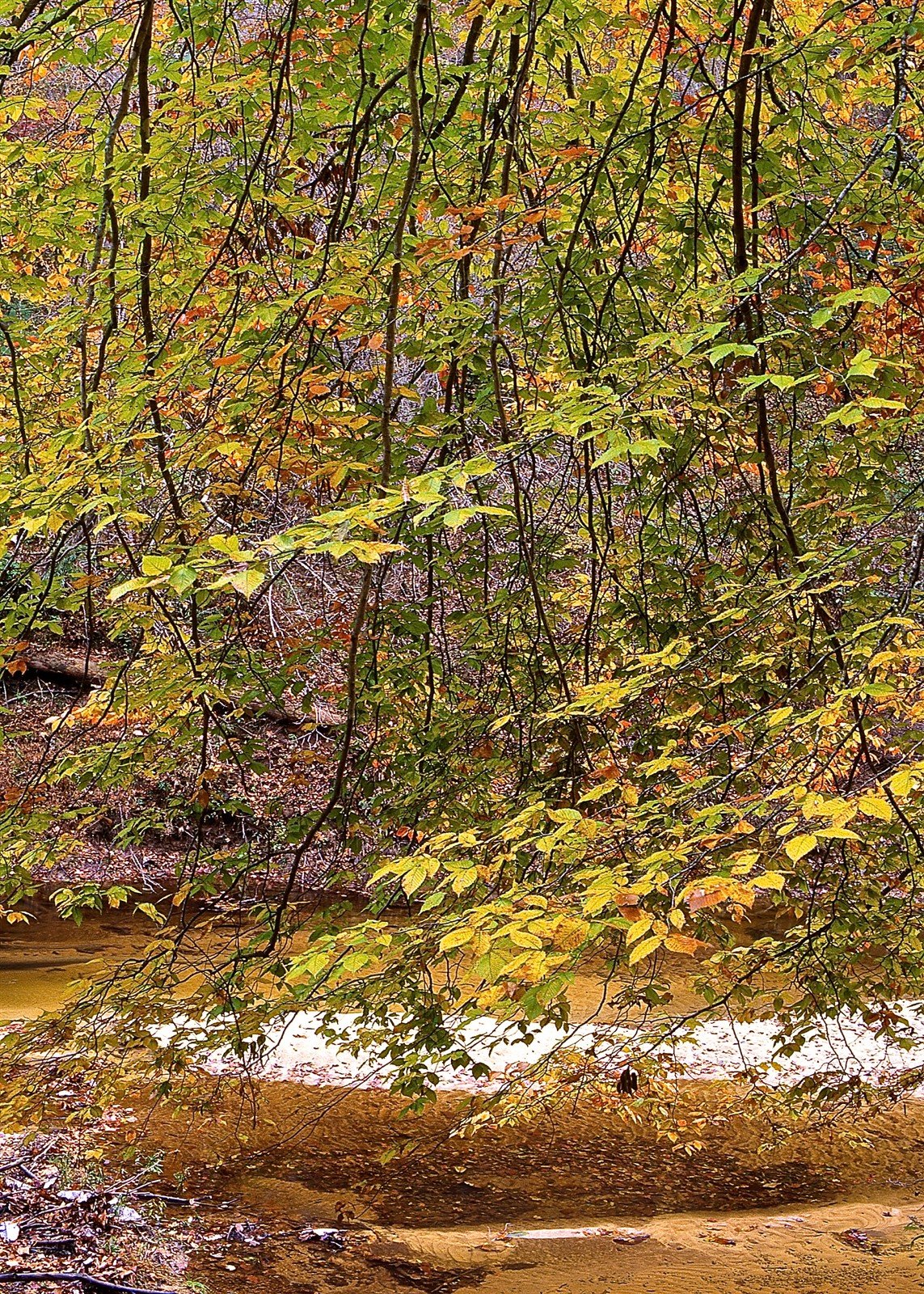
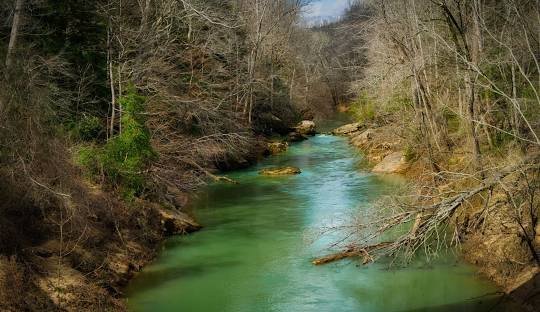
Seasonal color in the Sipsey. Photo: USDA Forest Service / Tim Palmer.
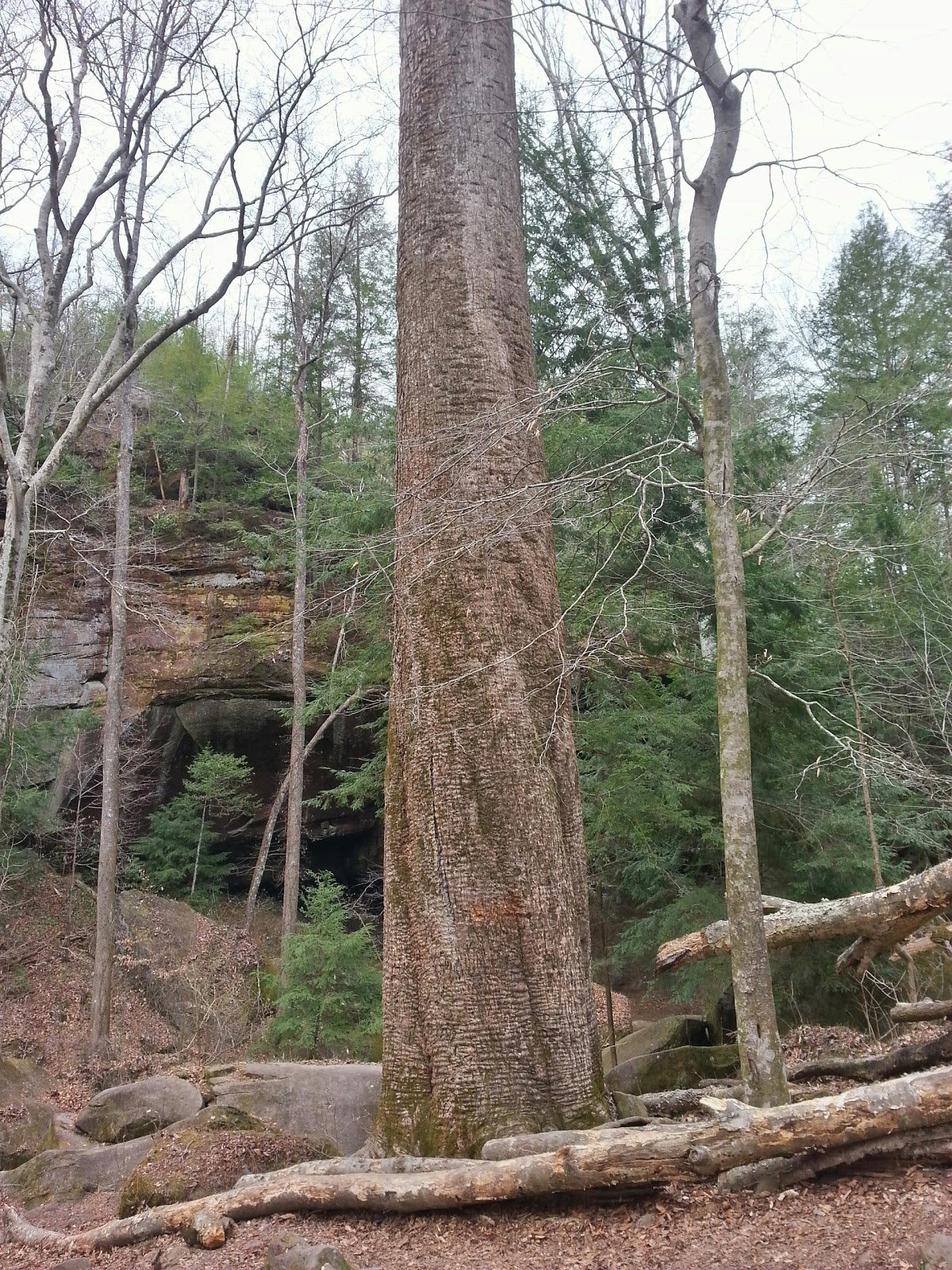
Stand beneath the Sipsey’s Big Tree and the forest takes on a different scale. This immense tulip poplar is a landmark for hikers drawn to Bee Branch’s sheltered hollows, tall trees, and sandstone walls. The surrounding country rewards a patient eye: look from the broad trunk to the canopy, then back to the ferns, moss, and fallen wood on the forest floor.
Bee Branch also has a long history of forest research. Its protected research natural area helps scientists study this distinctive woodland. Reaching the Big Tree is a backcountry outing for experienced hikers, with route choices, creek crossings, and rough ground to consider. Give the destination a day of its own and use current Forest Service maps and guidance.
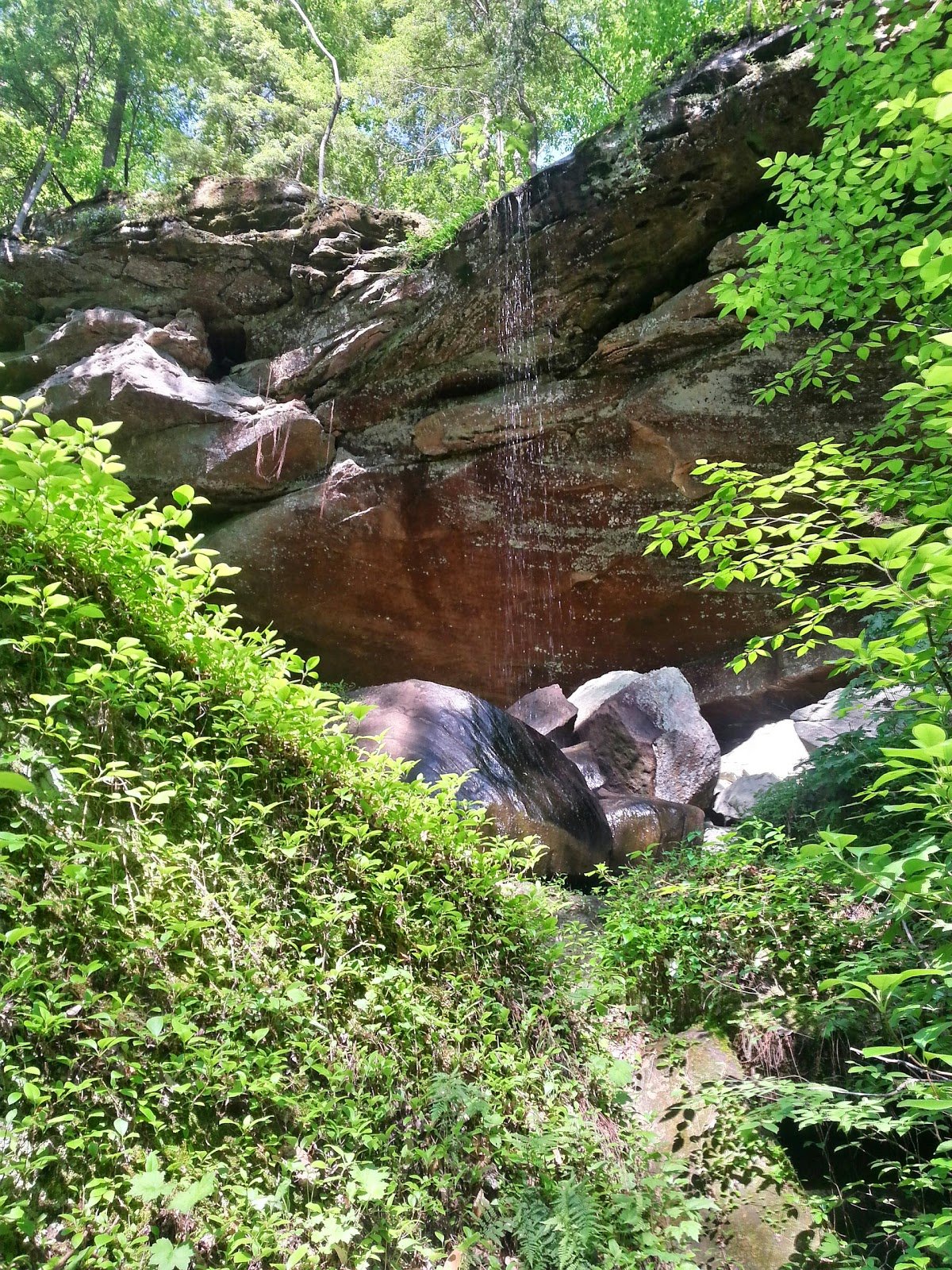
West Bee Falls brings a quieter kind of waterfall scenery to the Bee Branch country. Water threads over a rock lip into a hollow framed by foliage and weathered sandstone. During lower flow, the bluff’s layers and the surrounding forest become as much a part of the scene as the falling water.
Also called West Bee Branch Falls, this destination belongs on a carefully researched wilderness itinerary. It is separate from East Bee Branch Falls, so check the name and location on your route plan. Leave time to enjoy the hollow without rushing the return, and expect the amount of water to vary with recent rainfall.
For a river-focused stop, start your planning with the Sipsey River Picnic Area and Trailhead. The setting brings together broad shade trees, forest scenery, and the river landscape that gives this corner of Bankhead much of its character. It offers a different pace from a full-day search for a remote waterfall: pause, listen to the water, and enjoy the view beneath the canopy.
The picnic area and nearby wilderness trails serve different kinds of outings. Choose your walk in advance and check with the Bankhead ranger district about current site access, facilities, and trail conditions. A stop here can anchor a shorter forest day without committing your group to a long backcountry route.
Bankhead’s human history adds another layer to its forest scenery. Saltpeter Furnace appears in accounts of the area’s remote historic places, making it a subject for visitors interested in how people once worked in this landscape. Treat it as a researched history outing, with access advice from the ranger district. Historic remains should be left where they are; photographs and careful observation preserve the experience for the next visitor.
Waterfall country
Waterfalls are one of the great reasons to explore Bankhead National Forest. Each outing has its own character, from a creek spilling over a broad rock ledge to a fall tucked beneath a high bluff. Flow changes with rainfall and season, so plan around the landscape and the walk as well as the waterfall itself.
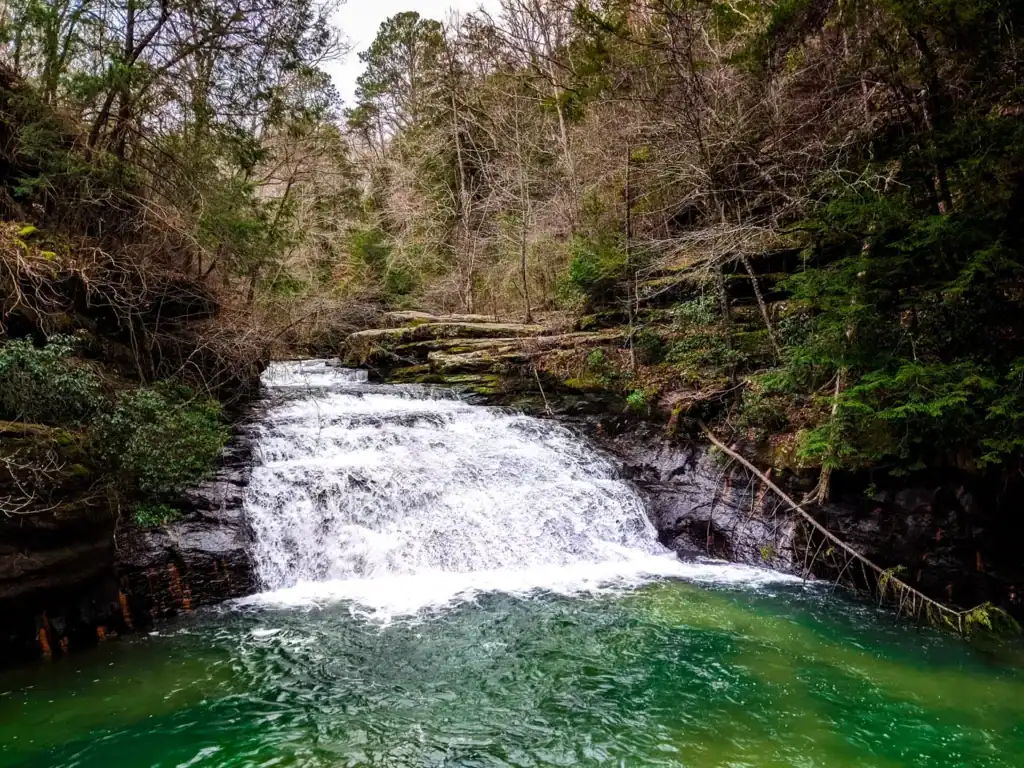
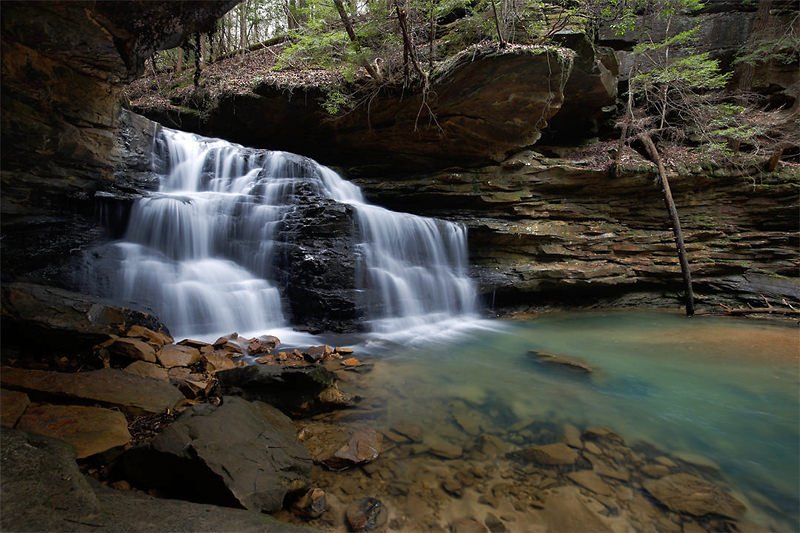
Spreads across a broad rock ledge on Hubbard Creek, giving the water a different shape from Bankhead’s taller plunging falls. Watch how the current fans out across the stone and gathers in the pool below. The combination of moving water, exposed rock, and wooded banks makes this a rewarding stop for photographs in changing light.
The falls are near Kinlock Road, but a short approach still involves natural terrain. Wear shoes with reliable grip, stay back from slick edges, and check current parking and access arrangements before visiting. Leave the creek’s stones in place to protect the small creatures that live among them.
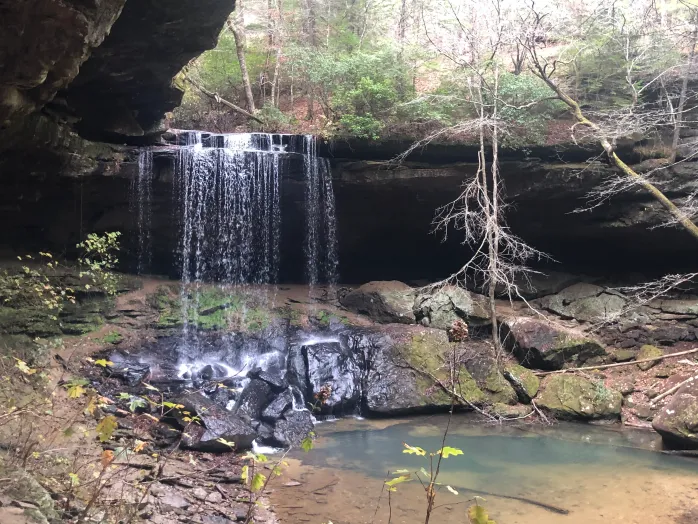
Sougahoagdee Falls — sandstone scenery and a woodland waterfall.
The walk to Sougahoagdee Falls is part of its appeal. Wooded creek scenery, imposing rock faces, and scattered boulders lead the eye through a landscape with something to notice well before the main waterfall comes into view. At the falls, the contrast between the rock wall and falling water creates one of Bankhead’s memorable woodland scenes.
Make this your main outing for the day and leave time to enjoy the approach. The route is unofficial, so research current access and carry dependable navigation. After wet weather, expect changing creek conditions and slippery footing; a beautiful waterfall photograph is never worth an unsafe crossing.
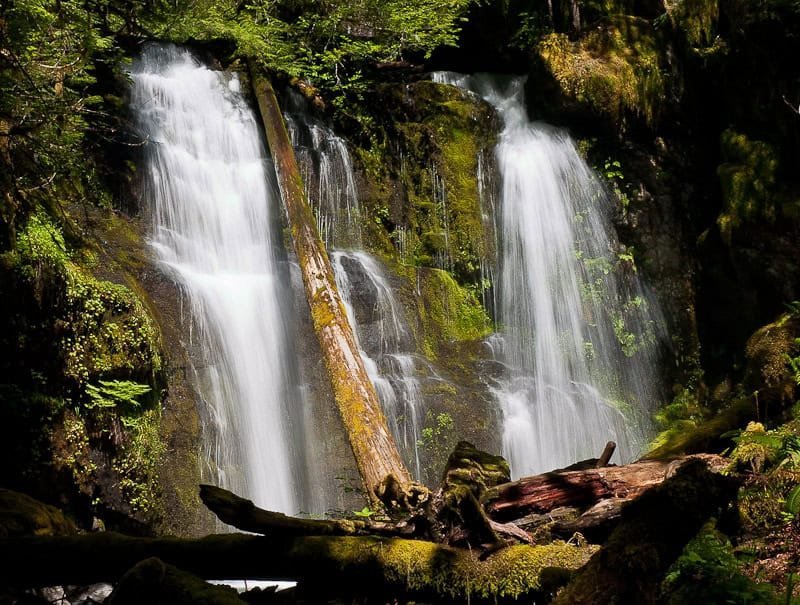
Offers an intimate view of Bankhead’s waterfall country, with water framed by forest, moss, and rock. It is a place to slow down and look at the details: a green ledge beside the cascade, patterns in the stone, and reflections in the creek. The wooded setting makes the outing appealing even when the flow is modest.
Its informal approach calls for preparation rather than a casual roadside detour. Confirm the access route, allow for uneven ground, and save enough daylight for the return. Choose a stable place to enjoy the falls while keeping clear of wet ledges and undercut banks.
Mize Mill Falls pours over a series of rock steps into a sheltered pool, with layered sandstone forming a natural frame around the water. The enclosed setting gives the scene a different feel from an open cascade: the sound of the falls, shaded bluff, and creek-level view draw your attention into the hollow.
Also written as Mize Mills Falls, it is often discussed alongside nearby Turkey Foot Falls. Research each approach before deciding whether to combine them. Informal paths and the descent into the hollow can be demanding even when a map suggests a short distance. Allow time for careful footing and a relaxed look at the scenery.
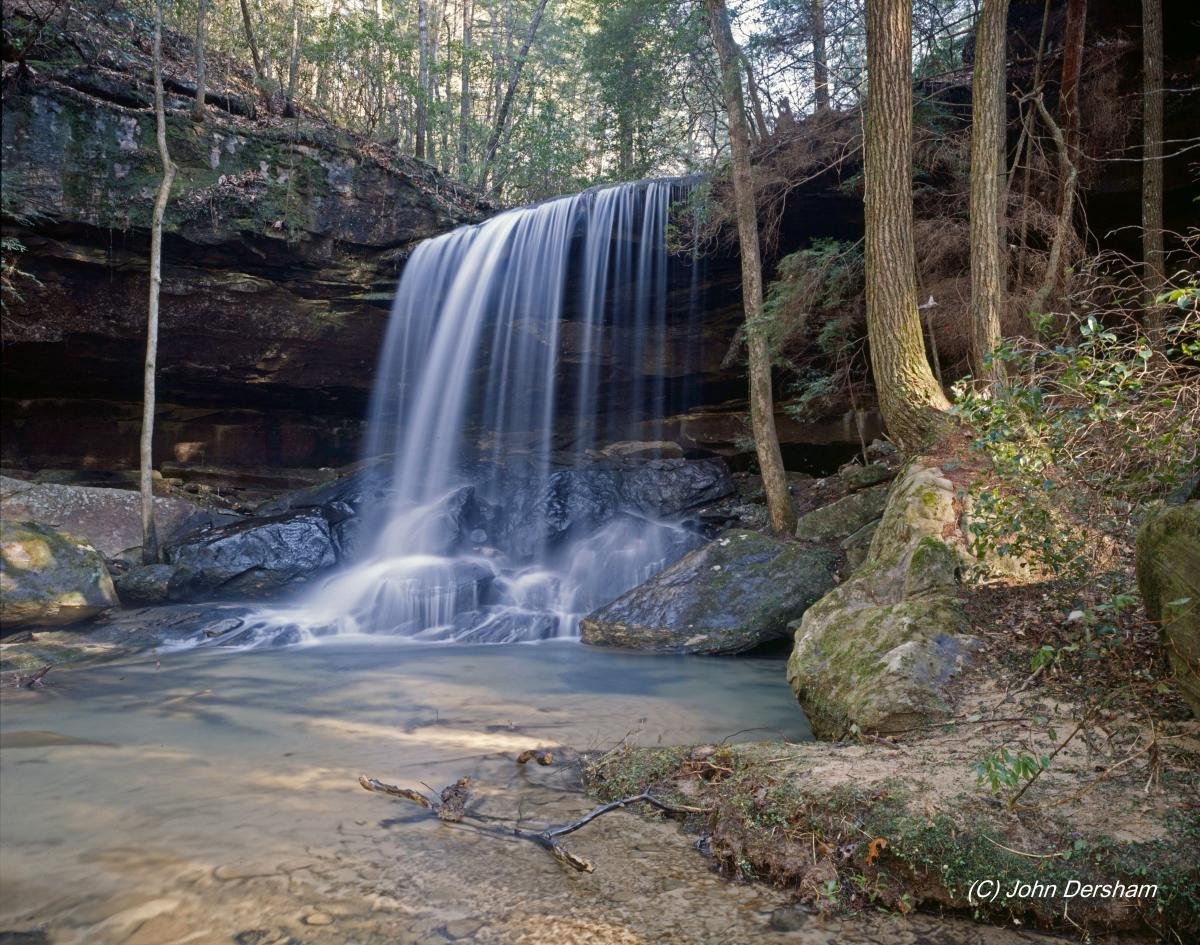
Turkey Foot Falls. Photo: John Dersham / Visit North Alabama.
Turkey Foot Falls carries water across a broad sandstone ledge in a wooded hollow. Its low, spreading form invites a wider view than a tall vertical waterfall: take in the overhang, the creek below, and the forest surrounding the scene. Water levels and seasonal foliage can make return visits look remarkably different.
This destination is near Mize Mill Falls, but combining the two should depend on your group’s experience and current conditions. Study the route before entering the hollow and leave room in the day for a slower return. Enjoy the view from secure ground, keeping away from unstable rock and slippery edges.
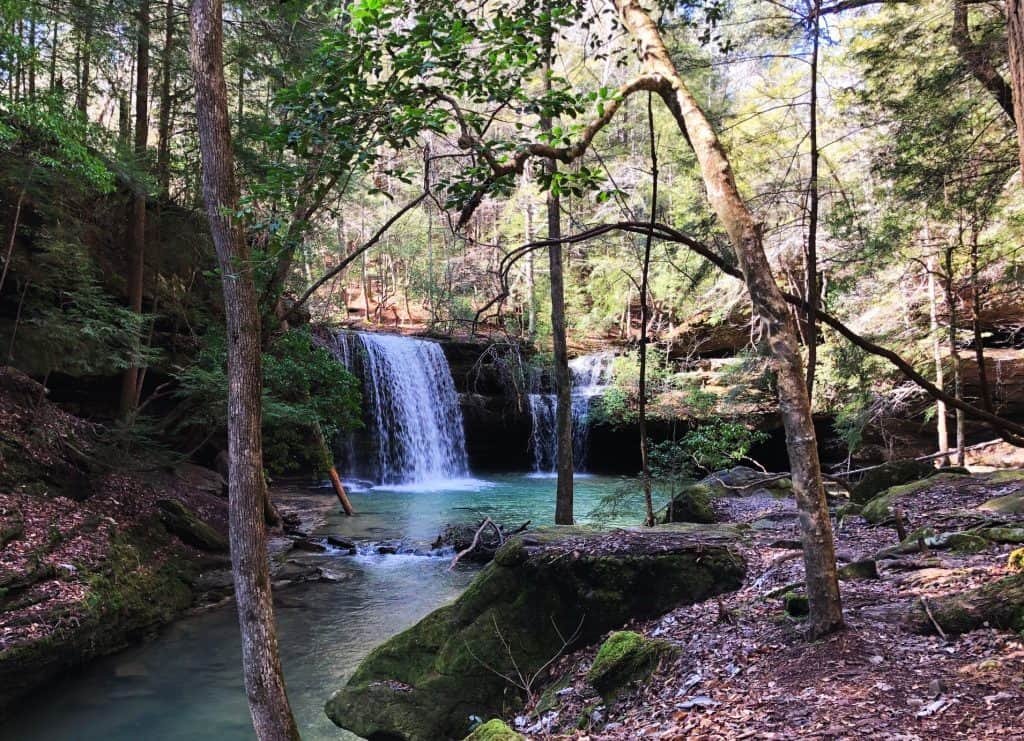
A curtain of water, a shaded rock ledge, and a forest-framed pool make Caney Creek Falls one of Bankhead’s memorable scenes. Build an outing around the walk as well as the photograph: changing light, creek sounds, and the surrounding trees are part of the experience.
Confirm the current approach and parking arrangements before you go. Access routes can involve private land, and conditions after storms can change the walk considerably. Stay on permitted routes and choose a turnaround time that leaves plenty of daylight.
Choose one waterfall as your main plan and give yourself time to enjoy the walk. Flow, footing, and access change with weather. Stay on permitted routes, carry a map and water, and never assume a waterfall pool is safe for swimming or jumping.
More to explore nearby
Natural bridges, local history, and lake days
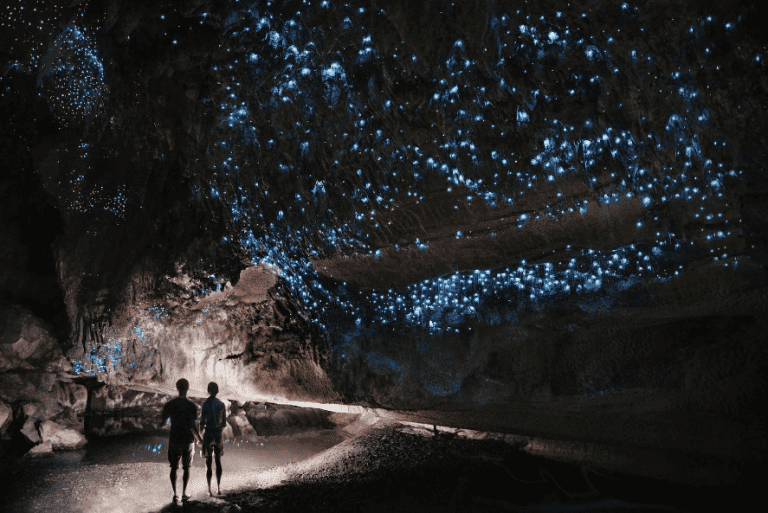
A glowworm night outing — see Dismals Canyon’s guided tour information.
Make room for a different kind of North Alabama landscape at Dismals Canyon near Phil Campbell. This privately operated nature conservatory has a canyon-floor walking route through mossy rock passages, large boulders, trees, and waterfalls. It is a separate destination from Bankhead National Forest, with its own admission and visitor arrangements.
A daytime walk lets you take in the canyon’s textures and shaded scenery. Guided night tours focus on the tiny bioluminescent creatures known as Dismalites. Choose the experience you want before setting out, and check availability rather than assuming a night tour accompanies daytime admission.
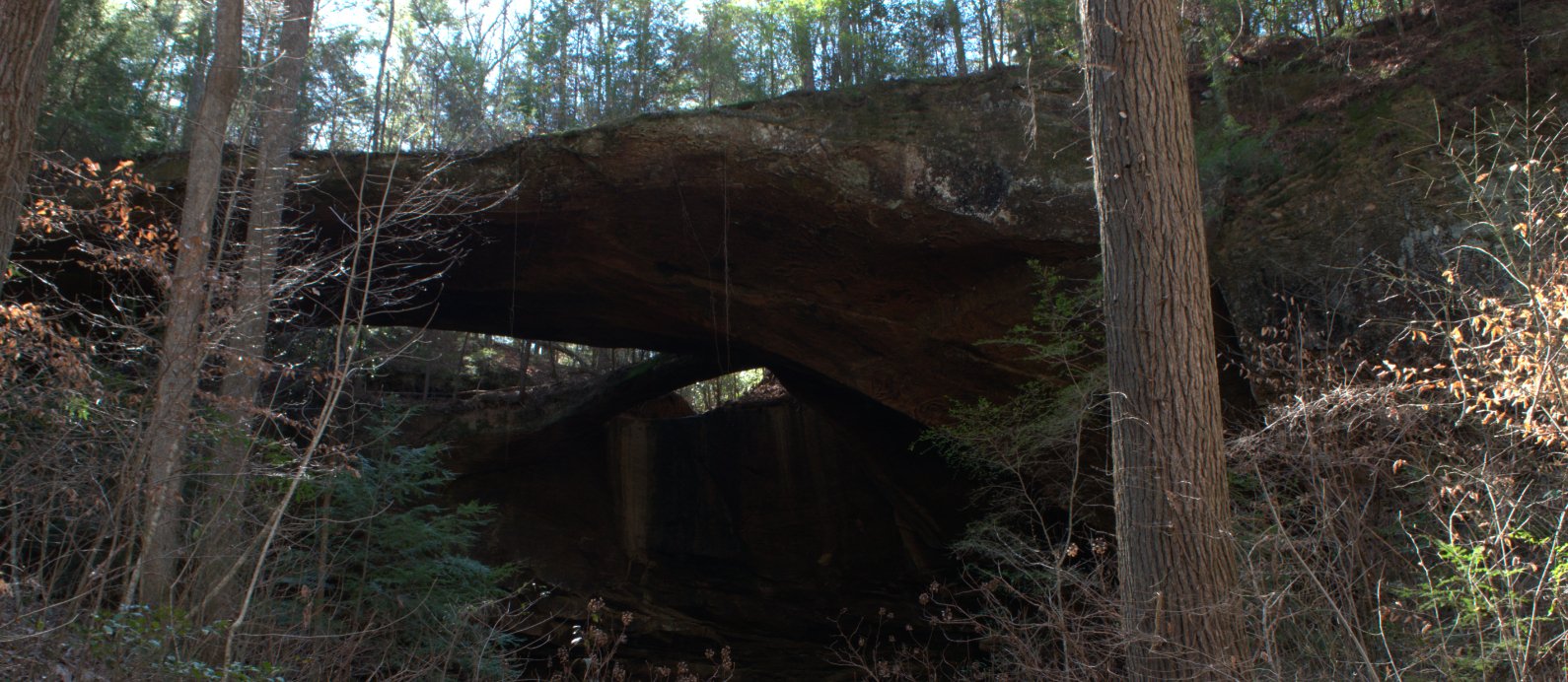
Looking for the area’s “land bridges”? Start with Natural Bridge Park near the town of Natural Bridge in Winston County. Its great stone arch is a striking contrast to the forest’s waterfalls: look up from the trail and take in the rock spanning the space overhead. The formation measures about 148 feet long and 60 feet high. Visitors view it from below; walking across the top is not permitted.
This is a privately operated attraction with its own admission and visitor policies. Check Natural Bridge Park’s visitor information for current hours, fees, and rules before making the drive.
Bankhead National Forest has its own Natural Bridge Picnic Area, a separate destination from the privately operated Natural Bridge Park. A short paved path leads through hardwood trees to a natural rock arch, giving visitors another way to appreciate the forest’s sandstone scenery. The Forest Service identifies this as Alabama’s oldest national forest recreation site.
Use the exact destination name when planning your drive. A compact stop here can fit a day of forest sightseeing, with time to look at the rock formation and surrounding woodland. Check the ranger district’s current access information before setting out.
Double Springs is more than a name on the route to the forest. It is the Winston County seat and the home community for The Ranch at Bankhead Resort. Take time to see the courthouse area and the Dual Destiny monument, whose divided Union and Confederate uniform reflects the difficult choices local people faced during the Civil War.
The county’s “Free State of Winston” identity comes from its history of resistance to secession and Confederate rule. Reading the monument’s interpretation adds a human story to a trip often planned around scenery. Pair a town stop with a shorter forest outing, or save it for a day when you want less time on the trail. Learn about the Dual Destiny monument.
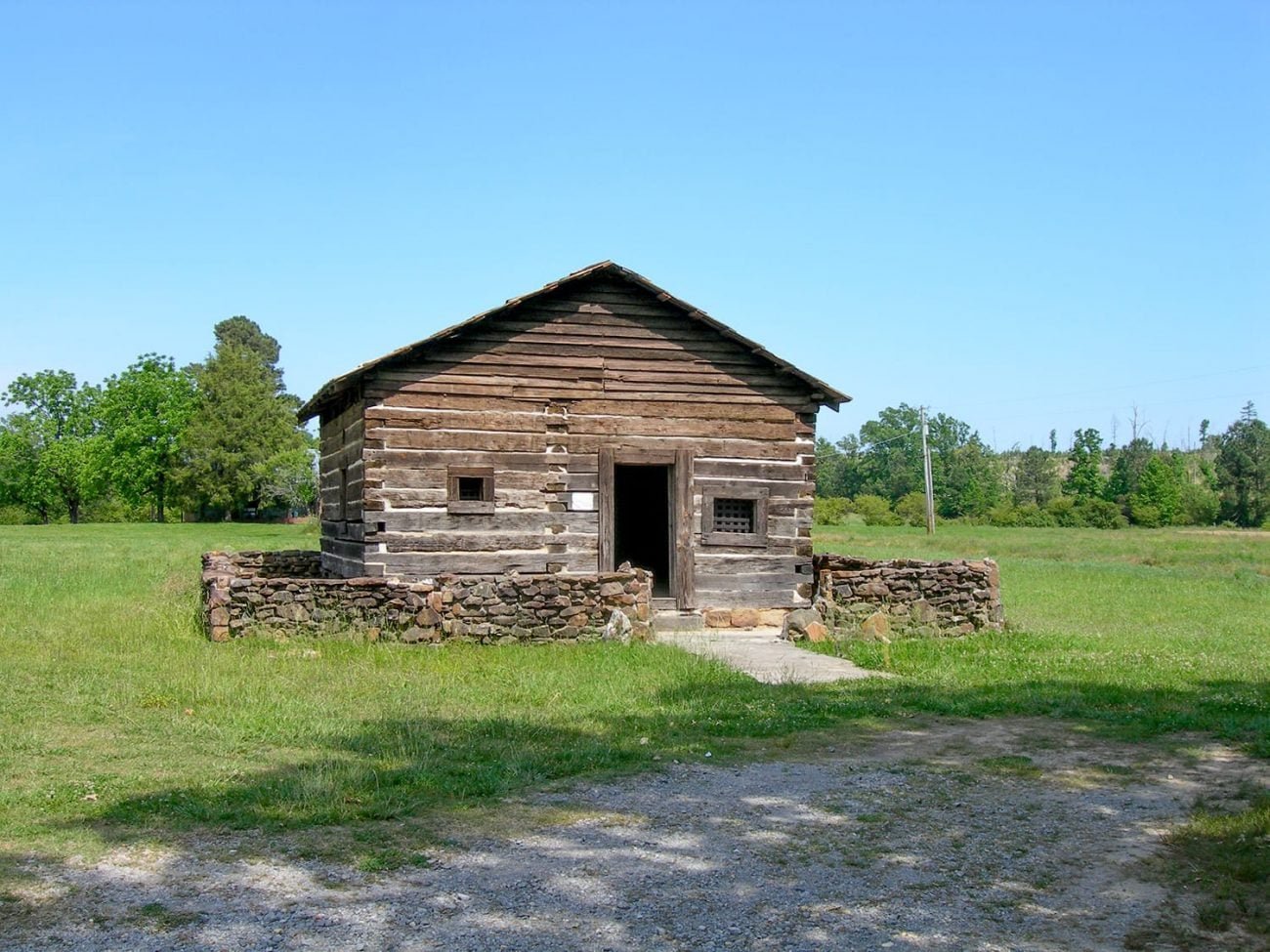
Houston Historic Jail brings Winston County’s past into view through a small, remarkably sturdy log building. Built around 1868, the jail recalls the years when Houston served as the county seat. Its hand-hewn timbers, compact proportions, and barred windows make it a distinctive stop for anyone interested in local architecture and everyday life in nineteenth-century Alabama.
Look closely at how the logs meet at the corners and how the building’s simple form served its purpose. The jail entered the National Register of Historic Places in 1975. Pair a stop here with the courthouse area and Dual Destiny monument in Double Springs to connect two chapters of the county’s history. Confirm current visitor arrangements before planning an interior visit.
Haleyville’s historic red telephone. Photo: City of Haleyville.
Haleyville earned its place in American history on February 16, 1968, when the nation’s first 9-1-1 call was made here. The city tells that story through its historic red telephone, displayed in the City Hall lobby. It is a memorable stop for visitors who enjoy discovering how an ordinary-looking place helped change everyday life.
Check City Hall access before planning to see the display. Haleyville also celebrates its connection to emergency services with an annual 9-1-1 Festival honoring first responders. Use the city’s current announcements for event dates and details. A Haleyville visit can add a history-focused half day to a weekend of forest scenery. Explore Haleyville’s first 9-1-1 call story.
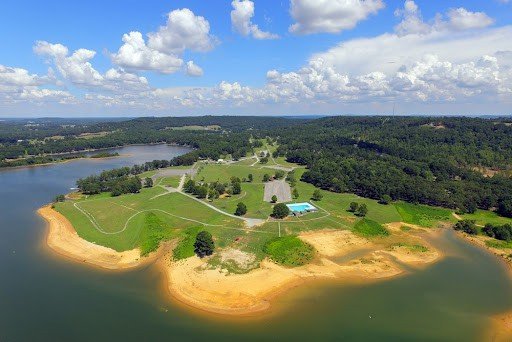
Lewis Smith Lake — open water and wooded shoreline.
Trade the enclosed feel of a wooded canyon for open water and shoreline views at Lewis Smith Lake. Boating and fishing offer a different rhythm from hiking, making a lake day a useful addition to a longer stay. Choose a specific public access point or arrange your activity before leaving; a lake map pin does not necessarily lead to public shoreline access.
Confirm launch access, rentals, operating hours, and any requirements with the relevant operator. Leave time simply to enjoy the view, then return to The Ranch for the evening.
Places to explore around Smith Lake
Choose one part of the shoreline for the day and connect a few nearby stops. The linked names below lead to the businesses’ own websites or visitor guides for landmarks without a separate website.
Choose a day-use visit for lake views and room to spend time outdoors. The county park lists playgrounds, pavilions, a fishing pier, and boat-launch facilities, with seasonal recreation and events adding variety. Check which facilities will be open on your date and plan the day around the activities your group enjoys.
The County Road 222 crossing is one of Smith Lake’s recognizable landmarks. It gives a sense of the lake’s scale as the road passes above the water. Include it as part of a planned lake route; enjoy the view from the water or a lawful stopping place, and keep the roadway clear.
Add a different perspective to your lake day with the engineering that created this landscape. Alabama Power’s lake information provides context for Smith Lake and its operation. Choose designated public areas, follow posted access restrictions, and check current lake and recreation information before making the dam your destination.
Trident Marina in Crane Hill is a useful starting point for planning a day on the water. The marina offers boating services and pontoon rentals. Contact the team about reservations, pickup arrangements, and services for your visit, then build an unhurried route with time to enjoy the lake’s coves and shoreline.
Rock Creek Marina is home to Squirrel’s Boat Rental, an established Smith Lake boating operator. Check directly with Squirrel’s about available boats, launch arrangements, and rental requirements. Choosing your departure point before the trip makes it easier to plan a realistic route around this part of the lake.
Cappy’s Boats offers another way to plan a rental-boat outing on Smith Lake. Its marina information covers facilities and supplies that can help you prepare before departure. Reserve directly with the operator and confirm passenger limits, required identification, pickup location, and return time for the boat you choose.
Smith Lake’s castle-like private home is an unusual shoreline landmark, with stonework that stands apart from the surrounding lake houses. It is a sight to appreciate respectfully from lawful public water. Keep your distance from the shore and private docks; there is no public house tour or landing implied by its place on a sightseeing list.
This named rock formation adds a natural landmark to a boat-based exploration of Smith Lake. Watch how the shoreline changes from wooded coves to exposed rock, and enjoy the formation from a safe distance. Plan for scenery and photographs rather than cliff jumping, and follow boating rules around other visitors.
15 ideas for a Muscle Shoals and Florence day trip
The Shoals extends your visit beyond forest trails into recording studios, architecture, museums, and Tennessee River scenery. Treat Florence, Muscle Shoals, Sheffield, and Tuscumbia as a separate day trip from The Ranch. Choose a few stops that share a theme rather than trying to fit all fifteen into one day.
Build a music-focused day around the rooms where the Muscle Shoals recording tradition took shape. Check tour availability before setting your schedule.
Pair this Sheffield studio with FAME for two perspectives on the region’s recording story. A guided visit gives the buildings and equipment their musical context.
Visit the Tuscumbia home associated with Helen Keller’s early life. Give yourself time to explore the story of Keller and Anne Sullivan rather than treating it as a quick photo stop.
Add architecture to your Florence itinerary with this Usonian house. Check the tour arrangements and use the visit to notice how the design brings everyday living and its setting together.
The Tennessee River’s scale comes into focus around Wilson Dam. Choose designated public viewpoints and check current access; operational areas are not automatically open to visitors.
Explore Indigenous history through the mound and museum interpretation. Approach the site as a place of cultural significance and follow the visitor guidance.
Choose a public access point for a lake outing, or plan boating and fishing with a local operator. Leave room for shoreline views and a slower afternoon.
Explore the Florence campus and its architecture during permitted visitor hours. Check the university’s current visitor information for access and events.
Also known as Tom’s Wall, this memorial honors the journey of Tom Hendrix’s great-great-grandmother back to the Tennessee Valley. Allow time for reflection and check visitor arrangements.
This historic Florence building opens a window onto the community’s past. Pair it with nearby downtown sights and check museum hours before you arrive.
Finish a music itinerary in Tuscumbia with exhibits celebrating performers and contributors connected to Alabama’s musical life. Check admission and opening hours directly.
For current tour schedules, visitor details, and a regional map, use the official Shoals attraction guide. Reserve time-sensitive tours first, then build the rest of the day around them.
A weekend with room to breathe
Arrival day: Settle into your cabin and choose one main outing for the next morning. Download your route and check the forecast while you have a reliable connection.
Your full day: Make Bankhead National Forest, a Sipsey hike, or one waterfall your focus. Avoid squeezing several unfamiliar trailheads into the same day.
Before heading home: Choose a town-history stop, Natural Bridge Park, or a lake view to finish the trip at an easier pace. Check opening times before committing to the route.
Before you set out
Check weather, land-manager alerts, trail access, and daylight. Wear suitable footwear, carry water and navigation, respect private property, and pack out everything you bring. Waterfalls and remote routes can change after storms; a flexible plan makes a better trip.